
When I was young I had two older aunts, my Dad’s sisters, Ethel and Violet. They were about 25 years older than Dad. They were born at the end of Queen Victoria’s reign and despite a similar upbringing, they led very different lives. Ethel was showy, cold and frosty but underneath, at the drop of a hat, she became emotional and it didn’t take much to break through her shell. She was married to Levi, a big, stout and jolly man who had his own Butcher’s Shop and looked every bit the part. In contrast, Aunt Violet was gentle, warm and loving, a strong woman married to John, a diminutive and strong man whose life was farming. Together they owned a small farm that always reminded me of Orwell’s Animal Farm. It was how I imagined the farm to look from reading the book. We used to visit them regularly when I was a lad and I used to spend many a day around the farm, helping out where I could. I have some strong memories of both sets of Aunts and Uncles but for very different reasons. They did, however, have something in common in so much that they had an obsession with keeping things for best.
I suppose it was a generational thing, evolving from times of austerity when people didn’t have many possessions or money to buy new things thereby saving things for special days and occasions. Aunt Violet fell into that camp and would only use the front room or parlour as she called it, at Birthdays, Christmas and special Sundays. Aunt Ethel was much the same but she had also developed and extended the mindset into making new goods last as long as possible before subjecting them to the spoiling and soiling that comes with everyday use.
Aunt Ethel lived in a modest stone-built Victorian inner terrace house that was insignificant from the outside and situated on a fairly busy road. There was a small front garden, paved and without decoration apart from a four-bottle milk crate on the top step next to the door. Passing through a small entrance hall, you would enter a mid-sized lounge area that led through to a kitchen diner. The lounge was dominated by a mahogany display cabinet that was filled with a floral bone china tea set that had only been used a couple of times since it was bought for them as a wedding gift back in 1927. There were crystal vases, cut glass wine glasses and etched sundae glasses, none of which had seen the light of day since the birth of her son Keith who was now 35.
My lasting memory of visiting Ethel and Levi was the plastic that adorned the settee, the armchairs and the dining chairs. For as long as I can remember when you sat at Ethel’s, you rustled. The sound and feel of the original protective plastic were forever memorable. The two-seater settee had two satin-covered embroidered cushions perched on the top, next to the winged, side headrests, these cushions were precariously placed. Low and behold if you knocked them from their perch. Ethel would sprint forth, move you to one side with a firm hand and place them back in their allocated position whilst continuing her account of Mrs Hargreaves bile duct problems and upcoming operation.
I remember never being able to properly relax at Ethel’s. I cannot remember a time when her everyday furniture was not covered in protective plastic. I also remember, some years later, Uncle Levi getting his first car and having the seats covered in plastic. Ethel used to sit in the back in her mink coat that made an appearance for the inaugural ride and Sundays. The smell of warm plastic, freesia perfume, heavily applied makeup and mothballs from the fur coat greeted us every time they pulled up outside our house. I remember trying my best to avoid the sloppy kisses and overwhelming scents as Aunt Ethel grabbed me and pulled me close. Levi would push a threepenny bit into my palm and tell me not to spend it all at once and to save it for a rainy day.
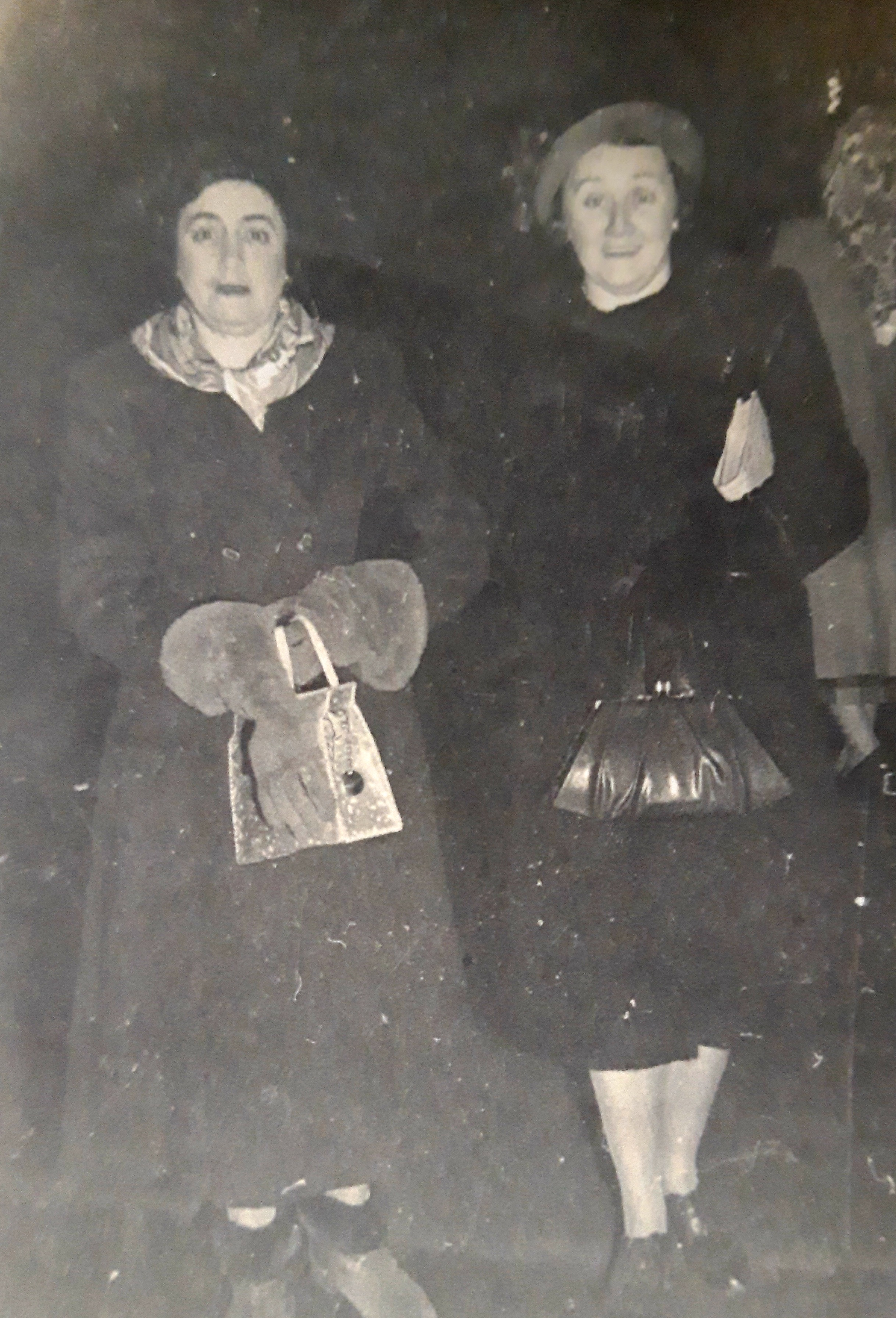
Aunt Violet’s parlour was a place of fascination to me. A room where we weren’t allowed unless it was a special occasion. The heavy wooden door would be firmly shut and there was no chance of sneaking in as it creaked when opened and rarely used.
You could never predict what occasion merited the use of the parlour. Sometimes for birthdays and Sundays, we would amass around the large farmhouse table in front of the kitchen range and share tea and cakes. On other birthdays and holidays, we would be instructed to go through to the parlour where Uncle John was tending a freshly lit fire in the large cast iron and granite fireplace. The parlour always felt a tad cool and damp, especially in the corners of the room. If you had the misfortune to be sat in one of the two upright and downright uncomfortable carved chairs that sat either side of the door at the back of the room then you never warmed. The room was sparsely furnished and had a dark green velvet chaise longue and two substantial armchairs in brown tufted chenille, a polished wooden floor and a pegged rug placed in front of the fire. Several black and white photographs hung on chains suspended from the picture rail. They were mainly past photographs of the farm and an especially prized photo of Major, Uncle John’s favourite workhorse that had passed some years ago. There was a silver-plated tray on a small sideboard that contained two cutglass decanters filled with sherry, dry and sweet, and six neatly arranged small sherry glasses. The only time they were used was after lunch on Christmas day and if there had been a wedding or birth in the family. A round mahogany table with a large aspidistra plant in a fancy pot obscured most of the parlour window. Other than that, it was a plain and sober room.
My Mum’s family also had a sense of keeping things for best, especially clothes, crockery and cutlery. Sunday best outfits, best china for Sunday tea and the best cutlery for Christmas day and special gatherings. As a consequence, both my Mum and Dad inherited some ‘keeping it for best’ traits such as clothing, which was sensible given we were typical boys and always coming home with ripped clothes and scuffed shoes. There were a few items of crockery and glassware that were only brought out on celebratory days but apart from that, the sense of not using something diminished as time went on and as the family become more affluent.
Nowadays, I have a completely different outlook on life from that of past generations. I do not consciously keep anything for best, I use things as I see fit and I wear clothes as and when. I think it is because I have more disposable income than my antecedents had, I try not to double up on things to use fewer resources and reuse where possible.
I also believe that life is short, and I want every day to be the best day and special days are spent with people, not things. Good food, great company and creating great memories will always rank above the best crockery and plastic-wrapped seating. I often think about those memories of saving things for best, they are tinged with sadness that despite their hard work and frugal mindsets Aunt Ethel and Aunt Violet rarely got to enjoy the fruits of their labour but when they did, there was an edge of wariness, just in case those best items were damaged or dropped, after all it was only for best.
 small tales